Science News
The science world is buzzing with claims about major mathematical breakthroughs, particularly surrounding the Riemann hypothesis, with multiple reports suggesting AI may have solved the most important problem in mathematics through work by Anthropic. Beyond mathematics, today's headlines also feature developments in astronomy including Sir Brian May's contributions to the Hera asteroid mission and observations of a giant star consuming its neighbor before exploding, while other stories cover practical innovations like geothermal energy solutions for data centers and NASA's evolving lunar exploration plans.
R.I.P. Margaret Hamilton, whose code saved the Apollo 11 Moon landing
Hamilton also coined the term "software engineering" and founded two successful software companies.
An experimental tour-de-force: Entanglement between glass bead and light
Getting a glass bead to act like a quantum object by entangling it with light.
4-hour battery storage is cheaper to install than gas turbines all across globe
Four-hour battery storage has become cheaper to install than open-cycle gas turbines across all 43 markets analyzed…
Climate satire Digger – with Tom Cruise on top form – is full of surprises
What are we to make of Digger, a climate satire by a normally well-respected film-maker that’s been largely panned by…
Record El Niño threatens Great Barrier Reef with ecological shift
Researchers are worried about the impact the strongest-known El Niño will have on the Great Barrier Reef, and whether…
Vanillin provides a sweet solution for chronic wound healing
The world may never go back to how it was after this monster El Niño
This El Niño is forecast to end around June next year after smashing all records, but its impacts could persist…
Will AI kill us all
AI researchers estimate a 10% median probability that future AI advances could cause human extinction or permanent human…
Margaret Hamilton, whose software helped land Apollo 11 on the Moon, dies at 90
Pioneering computer scientist led the development of the software for Nasa's Apollo mission and was awarded the…
Archaeologists Are Reconstructing the 'Invisible' Technologies of the Stone Age
Archaeologists have identified a 35,000-year-old carved ivory tool from Germany as a device for making rope and twine,…
Margaret Hamilton, who led software development for Apollo program, dies at 90
Margaret Hamilton, a pioneering computer scientist who led the software development team at MIT for NASA's Apollo…
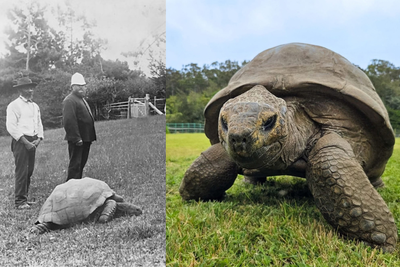
'Jonathan' is the oldest land animal on Earth
Jonathan, a 194-year-old Aldabra giant tortoise living on Saint Helena, is the world's oldest land animal and has had…
PA measles outbreak tops 1,000 cases, largest since disease was eliminated
Pennsylvania reported 1,066 outbreak-linked cases on Wednesday.
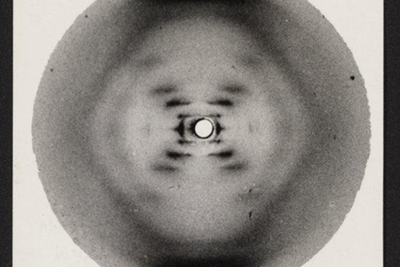
Despite what Watson said, Rosalind Franklin understood structure of DNA first
A new historical analysis challenges the narrative that James Watson uniquely recognized the significance of Rosalind…
Chemistry Nobel goes to reactions like those that gave life a hand
Altering molecular handedness has implications for the origins of life.
Pediatricians renew call to ban raw milk as anti-science rhetoric reigns
In renewed policy, pediatricians review the benefits of heating milk to kill germs.
A 5.3M-year-old deep-sea whale necropolis in the Diamantina Zone
Researchers discovered a vast whale necropolis in the Diamantina Zone of the southeastern Indian Ocean, containing 476…
194-year-old tortoise has exceptional DNA repair systems that fight off ageing
The genome of Jonathan the giant tortoise, a 194-year-old resident of St Helena island, has been probed to understand…
Neanderthal Europe was as much a wooden age as a stone age
When Neanderthals dominated Europe, it was likely that wood was at least as important to them as stone for working into…
In Vienna and Beijing, the first (thorium) nuclear clocks begin to tick
Cameraless photography creates unique images of environmental change
Aindreas Scholz's new exhibition sees the photographer using the unusual medium of cameraless photography to trace the…
Why do people look better in a mirror than in a photograph?
This question was posed as part of New Scientist’s Last Word series, in which readers give scientific answers to each…
What forces act on fluid moving through a pipe to make it spiral?
This question was posed as part of New Scientist’s Last Word series, in which readers give scientific answers to each…
Do olfactory illusions exist, similar to optical and audio illusions? part 3
This question was posed as part of New Scientist’s Last Word series, in which readers give scientific answers to each…
This week’s new questions
Why does music evoke emotion, and do people from other cultures feel the same way?
Have we found the world’s nichest science-themed tourist attraction?
Feedback's long-running quest to discover delightfully obscure science sites may have reached its zenith with the…

Navier–Stokes Lost in Translation
Researchers demonstrate that AI autoformalisation—translating mathematical proofs from natural language into formal…
How to Assemble Science
Humanity produces millions of scientific articles daily, yet individual studies are often reported in isolation, leading…
Colonisation of Australia led to big increase in wildfire danger
An analysis of lake sediments in south-eastern Australia has revealed that the expulsion of Indigenous communities in…
Why rediscovering extinct species can actually be a bad thing
Finding that long-lost plants and animals are still alive often isn’t an unmitigated cause for celebration, says…