Science News
The dominant science news story today concerns Claude AI's potential breakthrough regarding the Riemann hypothesis, a 167-year-old mathematical problem considered one of the most important unsolved questions in mathematics, with multiple outlets reporting that Anthropic may have achieved what many describe as a "holy grail" proof. Beyond mathematics, the day's science headlines also feature developments in exascale computing for fusion simulations, an upcoming NASA Moon mission, and observations of a giant star consuming its neighbor in a stellar explosion. Other lighter stories round out the coverage, including the history of golf ball dimples, insect photography, and Queen guitarist Brian May's contributions to asteroid research.
COVID vaccines still protect against heart problems, large study finds
Despite continued benefits, anti-vaccine rhetoric has driven down vaccination.
A Chinese rocket breaks apart dangerously close to the Starlink constellation
The rocket's breakup likely generated 100 to 150 new pieces of space junk.
Good news—we have extra time before the Sun ends life on Earth
Will the Sun roast Earth’s plants or starve them?
Has the answer to life's origins been hiding in our cells all along?
The surprising discovery of mysterious blobs inside our cells is revolutionising our understanding of how life works,…
Sperm have been made magnetic to allow IVF inside the body
IVF could be done inside the body using sperm that have been magnetised, allowing them to be directed to an egg while…
The social media ban is an experiment – here’s how it will be studied
Scientists have long grappled with how to measure the effect of social media on children.
Copper transport drug restores memory and clears toxic Alzheimer's proteins
Are useful and error-free quantum computers only two years away?
Quantum computing firm QuEra says it plans to make a fault-tolerant quantum computer and offer it to users through the…
Russia appears set to finally address long-term, serious space station cracks
This has been a persistent, behind-the-scenes dispute between NASA and Roscosmos.
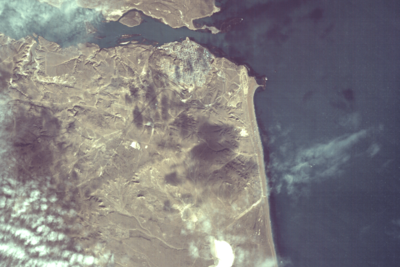
A satellite just learned to find things on its own — here’s what that means
In April, for the first time ever, an Earth observation satellite found what it was looking for, all on its own.
We may have finally solved cosmology's chicken-or-the-egg problem
Galaxies and their supermassive black holes evolve together, but which came first is an ongoing question.
Successful Psilocybin Treatment of Alzheimer
A case report documents transient functional improvements in an advanced Alzheimer's disease patient following…
Why Delhi feels hotter than what temperatures show
We spent a day out in the city with a thermal camera, recording surface temperatures indoors and outdoors.
The hallucinogenic mushroom that contains no known psychedelic
Researchers have sequenced the genome of *Lanmaoa asiatica*, a mushroom in Yunnan, China that causes vivid…
Did a medieval flying monk spot Halley's comet, twice? It's complicated
University of Leicester historian thinks Eilmer of Malmesbury saw two different comets: in 1018 and 1066
Measles surge in Utah sparks fears US could undo decades of progress
Utah is experiencing a measles surge that has raised concerns about the United States potentially reversing decades of…
Dangerous hormone-disrupting chemicals found in US breast milk samples
A peer-reviewed study of breast milk samples from Seattle mothers found alarming levels of hormone-disrupting chemicals…
A 'cold blob' in the Atlantic could be a sign of AMOC shutdown – CNN
A mysterious "cold blob" in the North Atlantic Ocean south of Greenland has cooled by nearly 1 degree Celsius since 1900…
SpaceX, Adding It Up – The $235B Cash Gap
SpaceX has disclosed approximately $235 billion in cash commitments through 2030 but plans to raise only $50-75 billion…
Consciousness likely not unique to earthlings, paper says
# Summary Philosophers Eric Schwitzgebel and Jeremy Pober argue that consciousness is likely not unique to Earth-based…
4 things to know about the new sunscreen ingredient the FDA approved
FDA OKs first new sunscreen ingredient in more than 25 years
The FDA has approved bemotrizinol, the first new sunscreen ingredient in over 25 years, which protects against both UVA…
Ancient genome duplications laid the foundations of complex brains
Why does paper fold so well?
A BBC CrowdScience episode explores why paper holds creases so well by examining the papermaking process and paper's…
What Happens to an Economy When It's Too Hot to Work?
Global density and biomass of arbuscular mycorrhizal fungal networks
Treating pancreatic tumours may have revealed cancer's master switch
Threads of underground fungal networks are long enough to reach beyond the Solar System
Researchers have quantified the length and mass of arbuscular mycorrhizal fungal networks globally.
Where Did Earth Get Its Oceans? Maybe It Made Them Itself
Scientists have long debated whether Earth's water came from comets or asteroids, but recent evidence suggests the…