Science News
The dominant science news story today concerns Claude AI's potential breakthrough regarding the Riemann hypothesis, a 167-year-old mathematical problem considered one of the most important unsolved questions in mathematics, with multiple outlets reporting that Anthropic may have achieved what many describe as a "holy grail" proof. Beyond mathematics, the day's science headlines also feature developments in exascale computing for fusion simulations, an upcoming NASA Moon mission, and observations of a giant star consuming its neighbor in a stellar explosion. Other lighter stories round out the coverage, including the history of golf ball dimples, insect photography, and Queen guitarist Brian May's contributions to asteroid research.
No young women have died of cervical cancer in England for years
We already know the vaccine against human papillomavirus, or HPV, greatly reduces infections and cases of cervical cancer, and now we have the first evidence it prevents deaths too
Taxonomy of the Occlupanida (parasitoids on bread bag tags)
This article humorously presents a fake "taxonomy" of Occlupanida, fictional parasitoid organisms that supposedly live…
Second carcass-eating fly species cleared by FDA for maggot wound therapy
Maggot therapy lacks robust data, but it has fans and a fail-safe "bacon therapy."
Sooner than expected? Useful quantum error correction promised for 2028.
Elsewhere, beyond-classical quantum hardware, plus classical computing fires back.
Solar in California surpassed natural gas in the first five months of 2026
Solar generation surpassed natural gas in California's grid during the first five months of 2026, with solar…
Chilling the body with drugs could limit brain damage from stroke
Putting brain cells into a hibernation-like state via drugs that cool down core body temperature may help to preserve…
The bigger the lizard, the bigger the Wiki page, discovers ecologist
Feedback is delighted to explore research digging into the relationship between a reptile's body mass and the length of…
AI chemist improves a challenging reaction in medicinal chemistry
Oldest known plague outbreak killed hunter-gatherer children
DNA evidence shows that plague bacteria devastated a community in Siberia more than 5000 years ago, challenging the idea…
Pigeons lock their eyes in place when they are flying
Bird-mounted headsets and backpacks have revealed the surprising things pigeons do with their eyes when on the wing
Our brains have their first thoughts unexpectedly early in life
By the time we’re born, our brains have all the hardware in place to form thoughts, and possibly even some conscious…
Our brains have their first thoughts surprisingly early in life
By the time we’re born, our brains have all the hardware in place to form thoughts, and possibly even some conscious…
"Truly evil" FDA rejection of gene therapy overturned after Trump official ousted
Gene therapy company UniQure had another FDA meeting after Vinay Prasad's exit.
Autism and ADHD are on the rise due to widening diagnostic criteria
A study of 140,000 people suggests that a broadening of the diagnostic criteria for autism and ADHD explains the sharp…
SpaceX alum nabs $22M to turn rocket engines into geothermal power plants
Critical Energy is turning rocket engines into geothermal power plants, and it wants to build 300 GW per year by 2045.

Why thinking out loud with someone beats thinking alone
Thinking out loud with others produces better problem-solving than solo thinking because conversation forces vague ideas…
U.S. Science Is in Chaos
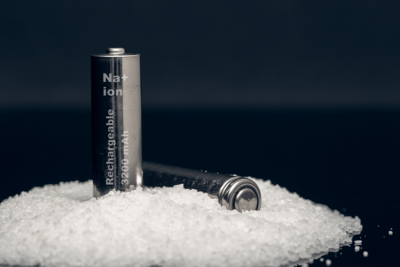
China’s New Sodium-Ion Battery Targets a 20-Year Lifespan and Stronger Cold-Weather Range
CATL unveiled a sodium-ion battery at a MIIT-backed event, claiming up to 15,000 charge cycles or 20 years of life and…

Semiclassical Gravity Efficiently Solves NP-Complete Problems
Researchers propose that semiclassical gravity—where the gravitational field remains classical while coupling to quantum…
Cockroaches scurry around with thousands of pieces of bacterial genomes
Transferring genes across species doesn't just happen in microbes.
U.S. pulling ocean sensors a 'shock' for Canadian research as El Niño nears
The U.S.
The secrets to keeping your brain sharp in old age
Neurologist Emily Rogalski studies "superagers" – people in their 80s or 90s with unusually…
A quantum state that lasts forever may finally be within our grasp
Defying the laws of thermodynamics, experiments are beginning to show that a quantum state that is frozen forever might…
Walking shark found in Papua New Guinea is new to science
Hemiscyllium dudgeonae is the tenth recorded species of walking shark, which use their pectoral fins to move across reef…
Autism may have two distinct subtypes that vary by brain activity
Evidence is mounting that there are distinct subtypes of autism, and now, scientists have found that the condition can…
Arctic Ocean reaches tipping point that could be dire for marine life
Disappearing sea ice is letting more sunlight in the Arctic Ocean and boosting phytoplankton growth, but this has…
Technology is changing our perspective on nature – at every scale
Inspired by Ariel Waldman’s docuseries Life Unearthed, columnist Annalee Newitz explores how microscopes, drones and…
New way of making espresso with ultrasound
Researchers at UNSW Sydney have developed a new espresso-brewing method using ultrasonic sound waves with…
Key mission for Europe's commercial space enterprise scrubbed again
Isar Aerospace is not hurting for money, but it is sorely lacking in the currency of flight experience.