Science News
The dominant science news story today concerns Claude AI's potential breakthrough regarding the Riemann hypothesis, a 167-year-old mathematical problem considered one of the most important unsolved questions in mathematics, with multiple outlets reporting that Anthropic may have achieved what many describe as a "holy grail" proof. Beyond mathematics, the day's science headlines also feature developments in exascale computing for fusion simulations, an upcoming NASA Moon mission, and observations of a giant star consuming its neighbor in a stellar explosion. Other lighter stories round out the coverage, including the history of golf ball dimples, insect photography, and Queen guitarist Brian May's contributions to asteroid research.
Does time come from the entire universe running computations?
Explaining the passage of time has been a gnarly problem in physics basically forever, but physicist and computer scientist Stephen Wolfram has a radical proposal for where it comes from.
This race car is made from plant fibers, volcanoes, ... and seawater?
The T70S can be eligible for racing events or built to be road-legal.
The strange metals forcing us to rethink how electricity really works
Some 40 years ago, physicists noticed certain metals were conducting electricity in a bizarre way no one could explain.
Dragonflies maneuver like fighter pilots
Male dragonflies' dramatic aerial combat maneuvers emerge from relatively simple vision-based rules.
New virus catalog reveals which pathogens pose the greatest threat
The data can help predict what a future pandemic virus might look like.
Salt batteries are about to shake up EVs and grid storage
Today, most rechargeable batteries are made from lithium ions, but sodium-ion alternatives could make battery tech much…
Chris Packham: 'I'd throw myself in front of a T. Rex to be consumed'
As Chris Packham gears up for his new TV show, Evolution, he tells Penny Sarchet why understanding the latest…
5 graphs that show how heatwaves are getting more dangerous
Longer-lasting hot spells and high temperatures at night are making it harder to cope, leading to thousands more deaths…
Ovary identity shift after menopause may contribute to inflammation
We used to think post-menopausal ovaries sat inert in the body, but evidence from mice suggests they may instead turn…
Bumblebee facial movements give clues to their inner lives
A series of experiments shows that bees respond differently to tastes depending on their internal states, hinting that…
Artefacts hint at cultural exchange between Neanderthals and humans
A cave on the Turkish Mediterranean coast was inhabited first by Neanderthals and then Homo sapiens, but the continuity…
What is the oldest American object ever launched into space?
From a Revolutionary War flag to the Statue of Liberty...
NRC is (sort of) getting rid of "as low as reasonably achievable" standard
Its issues with current nuclear safety standards are termed semantic, not physical.
Katalyst's satellite rescue mission is now in pursuit of NASA's Swift
It will take several weeks for the Link spacecraft to rendezvous with NASA's Swift observatory.
How healthy is your brain? We now know how to find out
In our efforts to keep our brains healthy, how do we know what is working?
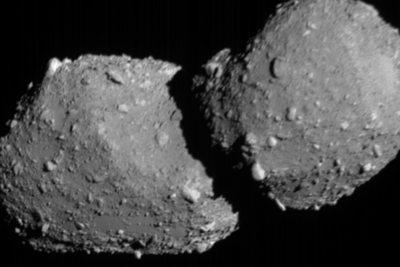
There were not one, but two asteroid encounters this weekend
The Torifune asteroid turns out to be shaped like a peanut.
5 things to know about sunscreen, according to a skin cancer expert
How much sunscreen should you be using, when should you apply it, and are there any downsides to doing so?
Collapse of AMOC ocean current may already be locked in
The fate of the Atlantic Ocean current that keeps Europe’s climate warm depends on our carbon emissions and the rate of…
Human brains may have got bigger for no particular reason
Our brains are large compared with other animals, so it is tempting to assume there was an evolutionary advantage to…
Beetroot juice is trending – its benefits go beyond the hype
Some marathon runners and other athletes swear by beetroot juice shots, but is there evidence they really do anything…
The missing 500 million: Cosmic bombardment melted Earth's first crust
The heat of the Hadean may have come from impacts as well as the interior.
‘Hobbit’ hominins scavenged meat left over by Komodo dragons
An experiment that involved feeding a dead goat to a Komodo dragon as well as an analysis of thousands of ancient bones…

Markets are competitive if and only if P = NP
Philip Maymin proves that competitive markets require computational intractability (P ≠ NP), as firms with sufficient…
A volcano has erupted remnants of Earth's primordial magma ocean
Earth was once covered by a global magma ocean, which later cooled and crystallised – now traces of this primordial…
Audacious mission to rescue NASA's falling telescope has launched
NASA’s Swift space telescope is reaching the end of its two-decade run in orbit – unless a satellite launched on 3 July…
Rocket Report: Indian startup nears first launch; SpaceX's millenary milestone
NASA awarded Rocket Lab deals for three dedicated launches using the company's Electron rocket.
The Fall and Rise of Screwworm
# Summary A flesh-eating parasite called the screwworm has been detected in Texas and New Mexico for the first time…
Orangutan mothers seem to plan playdates for their offspring
Female orangutans are generally solitary, but they travel more and eat less in an apparent effort to ensure their…
Nasa launches mission to save falling space telescope
A Nasa-funded robot has blasted off to catch a falling telescope in mid-orbit and blast it back to safety before it…
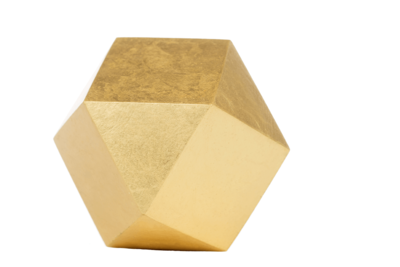
These 12-Sided Roman Bronze Objects Have Kept Their Secret Since 1739
First discovered in 1739, more than 100 Gallo-Roman dodecahedrons have since turned up, largely across the northwestern…