Why are we still working this hard?
|
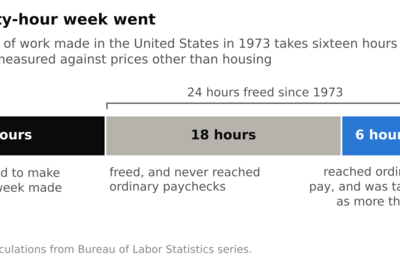
Despite productivity gains that would theoretically allow a 15-hour work week, Americans work longer hours today than in 1973—the 40-hour week remains unchanged while output per worker has increased 2.5 times. Rather than converting these productivity gains into leisure time, the U.S. captured all progress as increased output, meaning wages haven't translated into reduced working hours because they serve multiple functions: as a price signal for labor, as a ticket to share in society's wealth, and as a source of identity and community. The author argues that understanding what wages are "for" explains both why we work harder despite greater productivity and points toward potential solutions.